
What disappears when we lose the constellations?
A constellation is not only a pattern of stars. It is a technology for memory: a way to carry direction, season, story, and identity in a form larger than any single life.
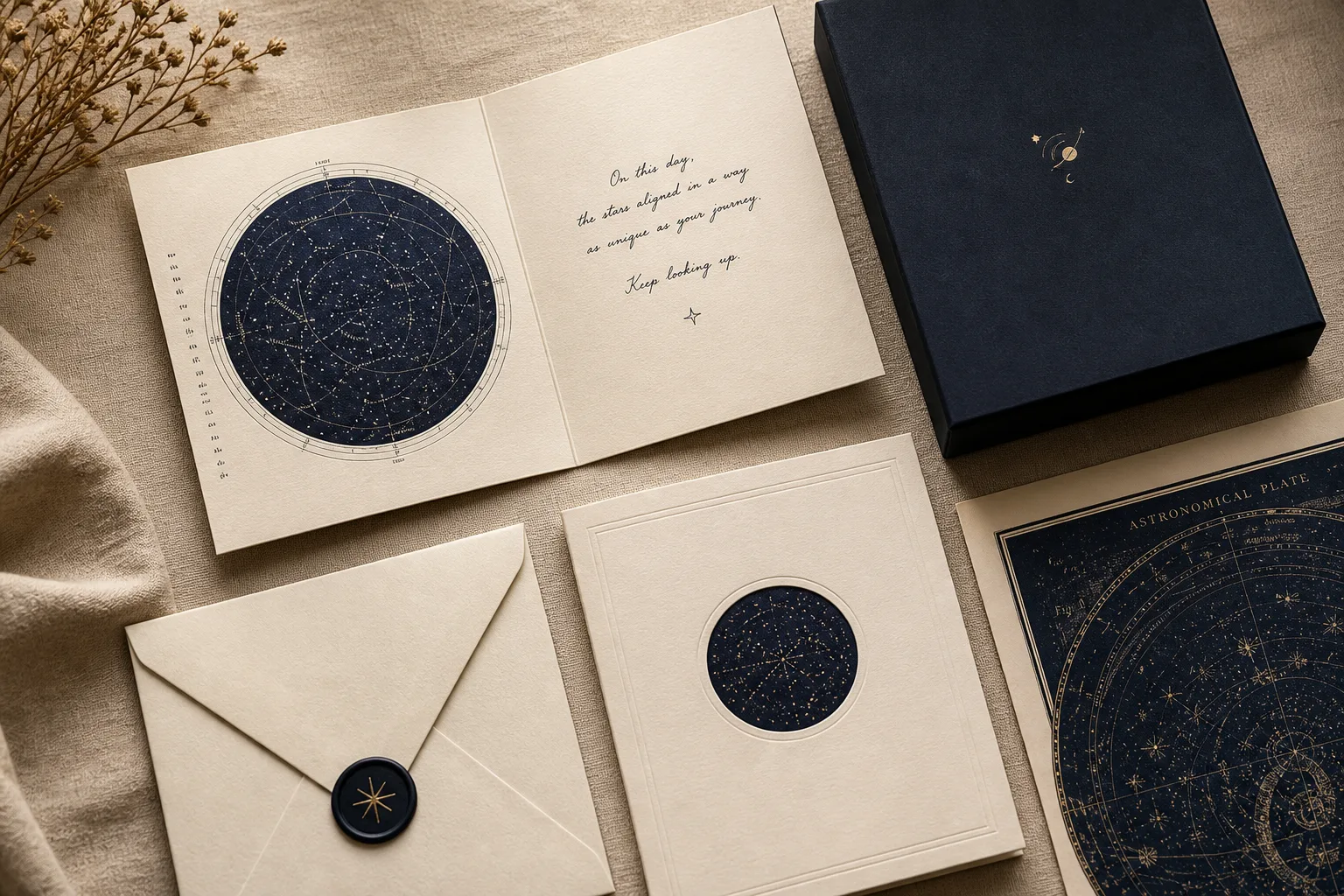
The sky was once part of the everyday landscape
Long before a phone could locate us, people read position and time from the sky. Rising and setting stars marked seasonal change. Familiar arrangements helped navigators maintain direction across water and land. Agricultural and ceremonial calendars were tied to recurring celestial events. The night was not an empty backdrop; it was a working layer of place.
Constellations made that enormous field memorable. Different cultures connected and named the stars differently, sometimes recognizing figures and sometimes the dark spaces within the Milky Way. The important fact is not that everyone saw the same picture. It is that communities built durable knowledge by returning attention to the same sky.
Light pollution removes relationships before every star
Skyglow raises the brightness of the background against which stars must be seen. Fainter stars disappear first, so a constellation can lose its internal structure while its brightest corners remain. Orion may survive as a simplified outline, but the dense field that locates it in the winter sky is gone. The sky becomes isolated points rather than a connected landscape.
This is why the loss is easy to underestimate. A person can look up, see a dozen bright stars, and conclude that the stars are still there. Astronomically, they are. Experientially, the network has collapsed. It is like hearing only the loudest notes of a piece of music and being told the composition remains intact.
Constellations teach us to notice time
The modern illuminated city works hard to make every hour feel alike. Constellations resist that flattening. Their changing positions reveal the turning night; their seasonal return makes a year visible. Learning even a few patterns can restore a slow form of attention that clocks and screens do not provide.
That attentiveness has conservation value. It is difficult to defend an abstraction called “sky quality.” It is easier to recognize that a familiar seasonal marker has faded, that the Milky Way no longer crosses a childhood landscape, or that a story can no longer be demonstrated outdoors to the next generation.
A simplified sky changes what can be handed down
Stories carried by constellations are not interchangeable decorations laid over the same dots. They are bound to language, landscape, seasonal movement, and communities of practice. When only the brightest stars remain, the loss is therefore larger than a thinner view. A teacher may still describe a figure, but a child cannot trace all of it. A navigator can explain an orientation, but the surrounding field that made it legible has receded. Knowledge moves from lived recognition into secondhand account.
This is one reason photographs cannot substitute for a protected night. An image can preserve information and provoke wonder, but it cannot recreate the act of standing in a familiar place while the sky changes above it. That direct encounter teaches scale, patience, and recurrence. It allows a story to be attached to weather, direction, and memory. Keeping constellations visible protects the conditions in which knowledge can remain practiced rather than merely archived.
Preservation begins with recognition
Find one constellation, then learn what surrounds it. Observe from the same place in different seasons. Ask whose stories belong to the land beneath your observing site, and seek sources created by those communities rather than treating every sky through a single inherited map.
Then protect the conditions that make recognition possible: shield outdoor light, use warmer and lower-output sources, add timers, and support local lighting rules. The goal is not to turn inhabited places dark. It is to keep useful light on the ground and return the rest of the universe to the sky.
Explore more Night Sky stories →